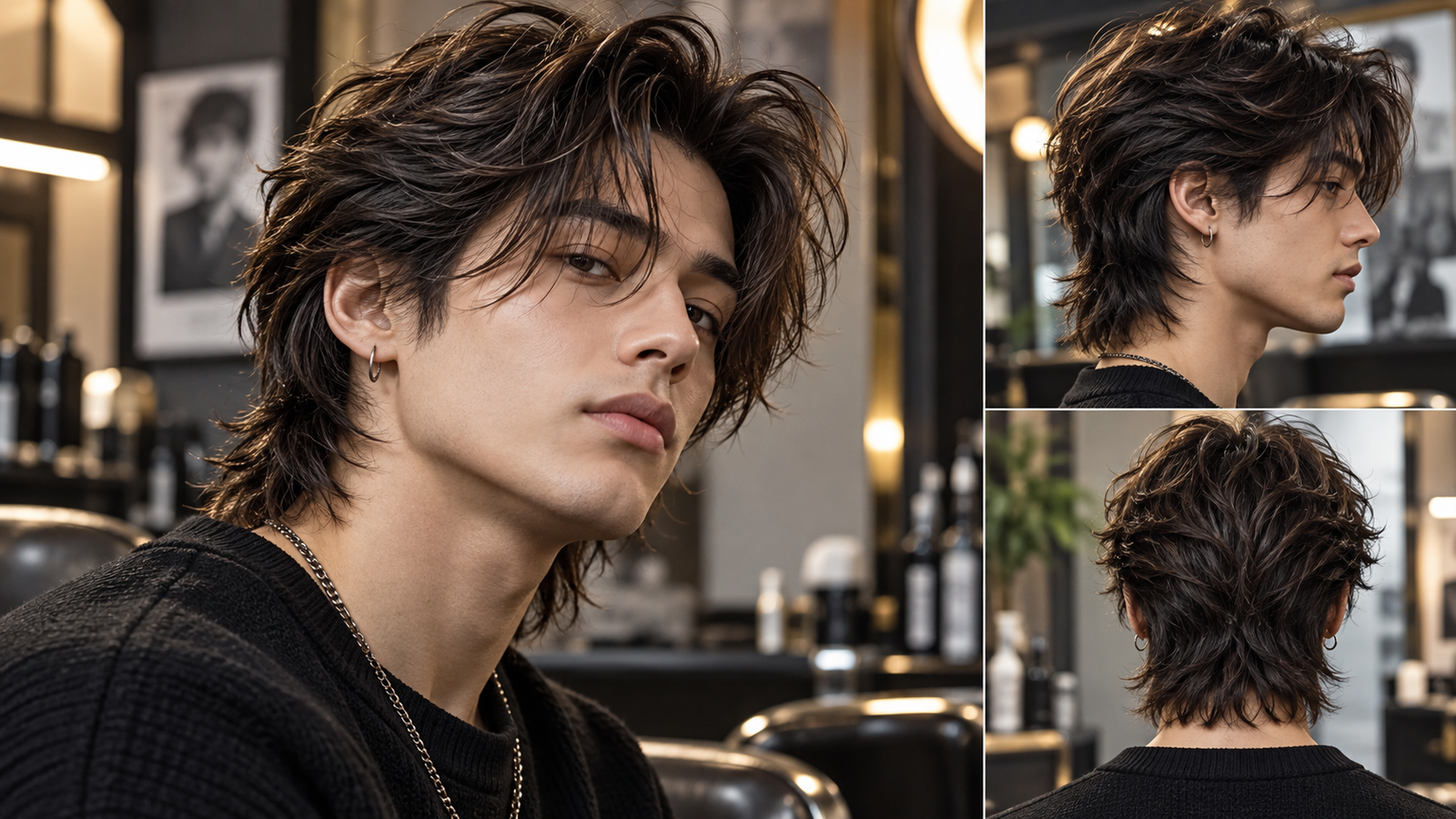
The wolf cut for men is a layered hairstyle that combines the shaggy texture of a shag haircut with the longer back associated with a mullet. It features volume around the crown, choppy layers, and a relaxed, slightly messy finish that can be adapted to different hair types and personal styles.
Whether you prefer a short, subtle haircut or a longer, more dramatic look, a wolf cut offers plenty of room for customization. The key is choosing the right length, layering pattern, and fringe for your natural hair.
In this guide, you’ll discover the best wolf cut styles for men, how to choose one for your hair type, how to explain the look to your barber, and how to style it at home.
What Is a Wolf Cut for Men?
A men’s wolf cut is a heavily layered haircut designed to create movement and volume at the top while keeping the back longer and textured. Unlike a traditional, neatly blended haircut, it often has an intentionally undone appearance.
The style can range from soft and natural to bold and edgy. Some versions feature curtain bangs and loose waves, while others combine choppy layers with a taper or fade.
Key Features of a Men’s Wolf Cut
Most wolf cuts share several characteristics:
- Layered crown: Shorter layers help create movement and a fuller-looking top.
- Textured sides: The sides may remain shaggy or be cleaned up with a taper or fade.
- Longer back: The hair around the nape is often left longer to create the signature silhouette.
- Choppy ends: Uneven-looking layers give the hairstyle its relaxed appearance.
- Flexible fringe: The front can feature curtain bangs, a forward fringe, or a natural, unstructured finish.
Not every wolf cut needs an extreme mullet shape. A barber can adjust the contrast between the top, sides, and back to make the haircut more subtle.
15 Best Wolf Cut Hairstyles for Men
The best wolfcut men style depends on your hair texture, preferred length, and the overall appearance you want. These variations offer different ways to wear the same basic haircut.
1. Classic Wolf Cut
The classic wolf cut features a voluminous crown, choppy layers, and a longer, feathered back. It creates a balanced look that works for men who want noticeable texture without an overly dramatic silhouette.
2. Short Wolf Cut
A short wolf cut keeps the overall length manageable while retaining the layered shape. It is a useful option for men who want something more textured than a conventional short haircut without committing to long hair.
3. Medium-Length Wolf Cut
Medium-length wolf cuts provide enough hair for visible layers, a flexible fringe, and movement around the neck. This length offers several styling options, including a middle part, a messy finish, or a swept-back look.
4. Long Wolf Cut
The long wolf cut emphasizes length at the back and around the sides of the face. It creates a more dramatic, flowing appearance and is particularly useful for men who enjoy experimenting with different partings and textures.
5. Korean Wolf Cut
A Korean-inspired wolf cut often features softer layering, face-framing sections, and a more controlled finish. Curtain bangs and natural volume can give it a polished appearance without losing the haircut’s relaxed character.
6. Fluffy Wolf Cut
The fluffy wolf cut emphasizes airy volume around the crown. Blow-drying, lightweight mousse, or a suitable volumizing product can help create lift without making the hair look stiff.
7. Wolf Cut With Curtain Bangs
Curtain bangs frame the forehead and can be parted in the middle or slightly off-center. Combined with layered sides and a longer back, they create a softer look that works particularly well with medium-length hair.
8. Wolf Cut With a Low Taper
A low taper gradually shortens the hair around the sideburns and neckline while preserving more length elsewhere. This creates a cleaner outline while keeping the wolf cut’s layered character.
9. Wolf Cut With a Fade
A fade introduces stronger contrast between the shorter sides and the longer hair on top. It can make the haircut appear sharper, although the final result depends on how the fade blends into the layers and back.
10. Wolf Cut With an Undercut
An undercut creates a more noticeable separation between the longer upper sections and the shorter sides. This is a bolder variation that may require more deliberate styling to maintain its shape.
11. Straight Hair Wolf Cut
Straight hair can show the haircut’s layers clearly, but it may not naturally have the same volume as wavy hair. A suitable layering pattern and lightweight texturizing products can help create separation and movement.
12. Wavy Wolf Cut
Wavy hair naturally complements the wolf cut because its bends emphasize the layers and give the hairstyle a relaxed finish. A small amount of styling cream can help define the texture without weighing it down.
13. Curly Wolf Cut
A curly wolf cut uses layers to shape the curls and manage bulk. The barber should account for curl shrinkage and how the hair sits when dry, rather than judging the desired length only when the hair is wet.
14. Messy Wolf Cut
The messy wolf cut has a deliberately tousled finish, with separated strands and less emphasis on a perfectly arranged shape. It can be styled using your fingers and a small amount of matte product.
15. Wolf Cut With a Fringe
A forward fringe changes the look of the wolf cut by bringing more attention to the forehead and front layers. It can be short and choppy or longer and swept to the side, depending on your preference.
Quick tip: Choose a reference photo that resembles your own hair texture. A style shown on thick, naturally wavy hair may look quite different when recreated on fine, straight hair.
How to Choose a Wolf Cut for Your Hair Type
Your natural texture, hair density, and current length all affect the finished haircut.
| Hair type | Suggested wolf cut | Styling consideration |
| Straight hair | Short or medium layered wolf cut | May need extra texture and lift |
| Wavy hair | Classic or fluffy wolf cut | Emphasize natural movement |
| Curly hair | Curly layered wolf cut | Account for shrinkage and curl shape |
| Thick hair | Textured or tapered wolf cut | Remove bulk selectively |
| Fine hair | Softer, less aggressive layering | Preserve the appearance of fullness |
| Long hair | Long wolf cut | Maintain the balance between layers and back length |
Wolf Cuts for Fine or Thinning Hair
A wolf cut can work with fine hair, but excessive layering may make some areas look less dense. A more restrained cut that preserves weight in strategic areas may create a better result.
If you have noticeable thinning, discuss your goals with a barber before choosing a heavily layered style. A haircut can change the appearance of hair, but it cannot increase actual hair density or treat hair loss.
Which Wolf Cut Suits Your Face Shape?
Face shape can help guide your decision, but it should not determine it entirely.
- Round faces: Experiment with crown height and fringe placement to create the overall proportions you prefer.
- Oval faces: Several lengths and fringe styles may work, depending on your features and personal taste.
- Square faces: Softer layers around the temples can create a less angular appearance.
- Long faces: A fringe or balanced side volume may help create the proportions you prefer.
Your hairline, head shape, natural growth direction, and styling habits matter too. Ask your barber to adapt the reference cut rather than copying it without considering these factors.
Wolf Cut vs. Shag vs. Mullet
These three hairstyles share some characteristics, but their overall shapes are different.
| Feature | Wolf cut | Shag | Mullet |
| Main characteristic | Shaggy layers with a longer back | Layers and texture throughout | Shorter front and sides with a longer back |
| Crown | Often voluminous | Varies by style | Can be short or textured |
| Back | Usually feathered and extended | Often follows the layered shape | Frequently more distinctly separated in length |
| Overall look | A blend of shag and mullet influences | Soft, layered, and textured | More obvious front-to-back contrast |
Is a Wolf Cut Basically a Mullet?
Not exactly. A wolf cut borrows the mullet’s longer back but usually incorporates more extensive shag-style layering and a textured crown.
A traditional mullet generally places greater emphasis on the contrast between the shorter front and sides and the longer back. A wolf cut can have a similar silhouette, but its layers often make the transition look softer and more connected.
The distinction is not absolute. Some wolf cuts look very similar to modern mullets, especially when the back is kept long and the sides are sharply shortened.
How to Ask Your Barber for a Wolf Cut
A reference photo is often more useful than simply asking for a wolf cut because the term covers many different styles.
What Should You Tell Your Barber?
Explain these four details:
- Length: Decide how much length you want to retain on top and around the nape.
- Layers: Explain whether you prefer subtle layers or a more pronounced, choppy shape.
- Sides: Specify whether you want natural sides, a low taper, a fade, or an undercut.
- Fringe: Decide between curtain bangs, a forward fringe, or a more open forehead.
For example, you could say:
“I want a medium-length wolf cut with textured layers around the crown, a natural fringe, and a slightly longer back. Please keep the shape soft and avoid making the sides too short.”
Adapt this request to your hair texture and the reference image you bring.
Before the cut begins, ask your barber how the proposed layers will look with your natural hair and how much length needs to be removed. If you want a subtle wolf cut, make that clear before significant cutting starts.
How to Style and Maintain a Men’s Wolf Cut
A wolf cut does not always require an elaborate routine. The right approach depends on your hair texture and how much volume or definition you want.
Daily Styling Routine
- Start with clean, damp hair.
- Apply a small amount of a suitable product, such as mousse for volume or styling cream for definition.
- Blow-dry with your fingers or a brush to direct the crown and fringe.
- Let naturally wavy or curly hair retain its texture rather than brushing out its natural shape.
- Finish with a small amount of matte clay or another suitable product if you want additional separation or hold.
Sea salt spray may help create a textured finish, but it can also make some hair types feel dry. Use products according to your hair’s needs rather than assuming you need every styling product.
How Often Should You Maintain a Wolf Cut?
There is no single maintenance schedule for every wolf cut. A short variation with a taper or fade may need more frequent barber visits to preserve its outline, while a longer, softer version may tolerate more growth.
As the hair grows, the crown can lose its intended shape and the back may become heavier. A trim can restore the balance between the layers without necessarily removing much length.
If you want to grow your wolf cut out, tell your barber before the next trim so the layers can be adjusted gradually.
Frequently Asked Questions
Is wolf cut good for men?
Yes, a wolf cut can be a good option for men who like layered texture, natural movement, and a longer back. The best version depends on hair type, desired length, and styling preferences.
Is wolf cut haram in Islam?
Islamic rulings on hairstyles depend on the principles and scholarly interpretations being followed. Some scholars discuss the prohibition of qaza, commonly associated with shaving parts of the head while leaving other parts unshaved. Whether a particular wolf cut falls under that ruling depends on its actual shape and how the relevant scholar interprets it. If this concerns your religious practice, ask a trusted, qualified scholar and show them the specific haircut you intend to get.
Are wolfcuts attractive?
Attractiveness is subjective. Some people prefer the wolf cut’s textured, relaxed appearance, while others favor cleaner or shorter hairstyles. Choosing a variation that complements your natural hair and suits your personal style is more useful than following a trend simply because it is popular.
Is a wolf cut high-maintenance?
It can be low to moderately demanding, depending on its length, texture, and styling. A natural, longer version may require little daily work, while a fluffy or sharply tapered variation may need more attention.
Can men with straight hair get a wolf cut?
Yes. Straight hair can be shaped into a wolf cut using carefully placed layers. Depending on its natural thickness, you may need a suitable styling technique to create additional lift and separation.
How long does your hair need to be for a wolf cut?
The required length depends on the variation. Short versions can be adapted to relatively shorter hair, while dramatic, long wolf cuts need more length at the crown and back. A barber can assess whether your current hair is long enough for your preferred look.
Can I cut a wolf cut at home?
It is possible to attempt a wolf cut at home, but uneven layers and excessive cutting can be difficult to correct. If you want a specific shape, a barber is generally the safer choice, especially for your first wolf cut.
Conclusion
A wolf cut for men combines layered texture, crown volume, and a longer back in a style that can be adapted to different hair types and preferences. From short and subtle variations to long, curly, or tapered versions, the best choice is the one that works with your natural hair and desired level of maintenance.
Choose a suitable reference photo, discuss the layers and length with your barber, and keep your styling routine simple. A customized cut will generally serve you better than copying a trend without considering your own hair.
You May Also Read: Prince Harry