
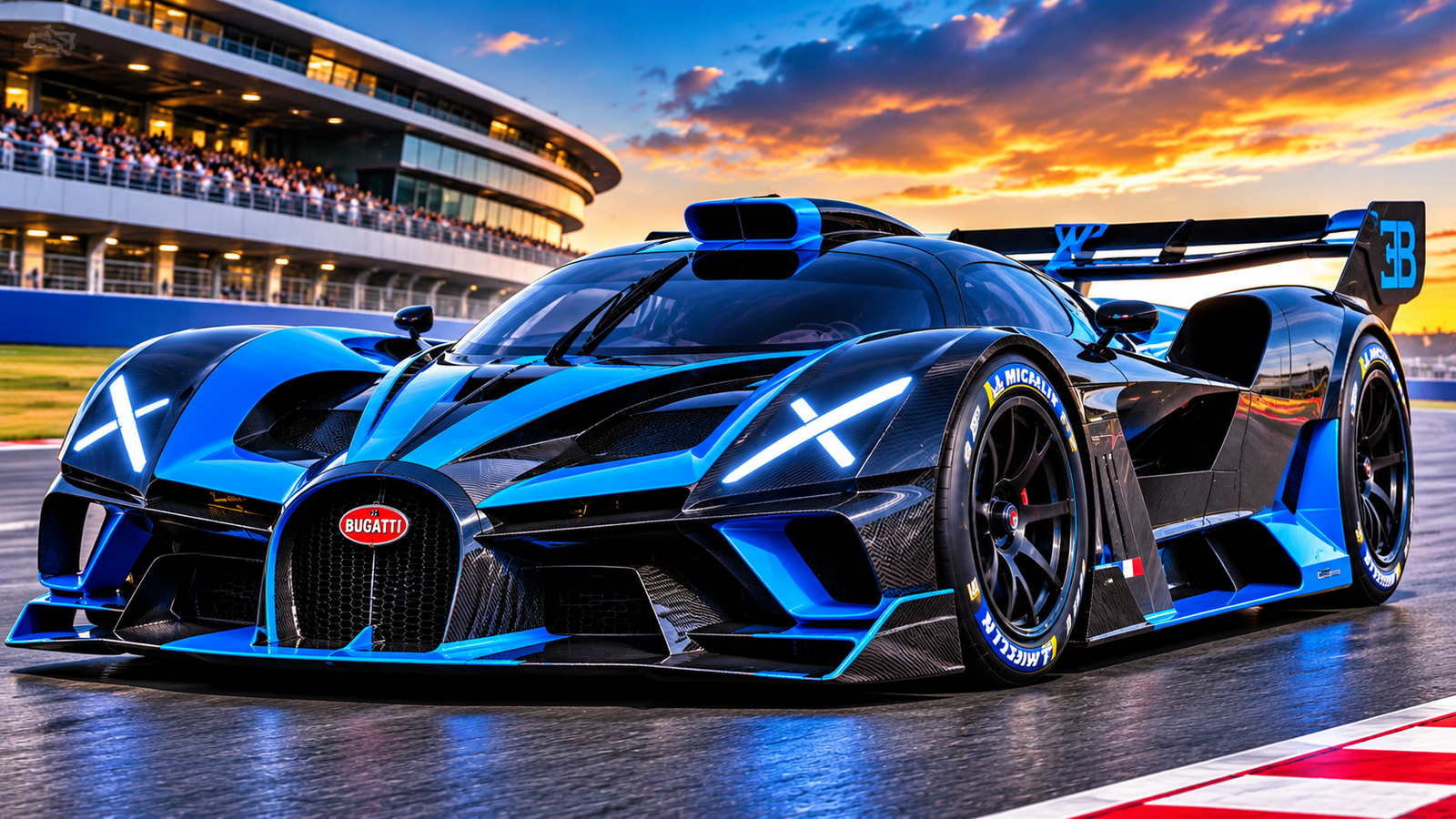
The Bugatti Bolide is an extreme track-only hypercar built around an 8.0-litre quad-turbocharged W16 engine, lightweight carbon-fibre construction, and advanced racing aerodynamics. Unlike the road-focused Bugatti Chiron, it was developed to deliver an uncompromising circuit-driving experience. Its production version produces 1,578 horsepower (1,600 PS), generates up to 1,600 Nm of torque, and has a theoretical dry weight of 1,450 kg.
Originally introduced as an experimental concept in 2020, the Bolide eventually became a limited-production model with just 40 examples planned. Its combination of enormous power, specialised racing technology, and exclusive production makes it one of the most distinctive cars in Bugatti’s history.
What Is the Bugatti Bolide?
The Bugatti Bolide is a track-focused hypercar designed to explore the performance potential of Bugatti’s legendary W16 engine. Rather than prioritising everyday comfort, luggage space, or public-road usability, its engineering focuses on speed, handling, aerodynamic efficiency, and driver control.
Bugatti first revealed the Bolide concept in October 2020. The original project demonstrated how an extremely lightweight vehicle could combine the brand’s powerful engine with a specialised racing chassis and aggressive aerodynamic components.
In August 2021, Bugatti announced plans to build a limited production run of 40 vehicles. The production version required further development, including changes to its structure, safety equipment, and overall engineering.
This distinction matters because the original concept and final production car have different performance specifications. The production Bolide is the version buyers and automotive enthusiasts should use when discussing its final technical figures.
Bugatti Bolide Engine and Performance
8.0-Litre Quad-Turbocharged W16 Engine
At the heart of the Bugatti Bolide is an 8.0-litre W16 engine equipped with four turbochargers. This powerplant comes from the same remarkable engine family that made models such as the Chiron famous.
Its W16 configuration uses four banks of cylinders arranged in a compact design. The four turbochargers help deliver the enormous power required for extreme track performance.
However, the Bolide is not simply a Chiron with a different body. Its engine calibration, cooling arrangements, aerodynamic package, chassis, and other systems were developed around its track-focused purpose.
Bugatti Bolide Horsepower and Torque
The production model delivers 1,578 horsepower (1,600 PS) and 1,600 Nm of maximum torque.
The original 2020 concept was advertised with an output of approximately 1,825 horsepower. That figure should not be confused with the production car’s specifications.
This difference is important when comparing articles and technical information online. The concept represented an experimental performance target, while the production version received its own final engineering specifications.
Bugatti Bolide Specifications
The production Bugatti Bolide combines a powerful W16 engine with a lightweight chassis and racing-focused mechanical components. Its specifications reveal why the car was developed specifically for demanding circuits rather than normal road driving.
| Specification | Bugatti Bolide |
| Engine | 8.0-litre W16 |
| Displacement | 7,993 cc |
| Turbochargers | Four |
| Maximum power | 1,600 PS (1,578 bhp) |
| Maximum torque | 1,600 Nm |
| Transmission | 7-speed DSG |
| Drivetrain | Permanent all-wheel drive |
| Theoretical dry weight | 1,450 kg |
| Weight-to-power ratio | 0.91 kg/PS |
| Top speed | 380 km/h (236 mph) |
| Production quantity | 40 units |
| Braking system | Carbon-carbon |
Source: Bugatti technical specifications and official engineering announcements.
One detail worth understanding is the stated dry weight. The 1,450 kg figure represents a theoretically possible dry weight, not necessarily the weight of every customer-configured vehicle. Additional equipment and individual specifications can affect the final figure.
Exterior Design and Aerodynamics
Lightweight Carbon-Fibre Construction
The Bugatti Bolide features an aggressive exterior designed around performance rather than conventional luxury styling. Its carbon-fibre construction helps reduce weight while providing the structural strength needed for demanding track conditions.
The body incorporates a low profile, wide stance, large aerodynamic surfaces, and distinctive X-shaped lighting. These features give the vehicle a recognisable appearance while supporting its motorsport-inspired engineering.
Reducing weight is particularly important in a high-performance vehicle. A lighter car can respond more effectively to steering inputs, braking forces, and changes in direction.
Aerodynamic Features and Downforce
Aerodynamics play a major role in the Bolide’s performance. Its front splitter, rear wing, underbody design, and carefully shaped bodywork help manage airflow around the vehicle.
Downforce pushes the car towards the track surface, improving tyre grip and stability through corners. However, generating more downforce can also increase aerodynamic drag, potentially reducing straight-line speed.
Bugatti developed adjustable aerodynamic components so the car could be configured for different circuit characteristics. Its engineering team tested the front splitter and rear wing to maintain an appropriate balance between downforce and drag.
Inside the Bugatti Bolide
Racing-Inspired Cockpit
The Bugatti Bolide interior is very different from the luxurious cabins found in conventional Bugatti models. Instead of prioritising rear-seat entertainment, extensive storage, or everyday comfort, its cockpit focuses on driver control and visibility.
The steering wheel features a racing-inspired design with integrated controls. Digital displays provide important driving information, while the seating arrangement keeps the driver and passenger positioned for track use.
The minimalist approach also supports the vehicle’s weight-saving philosophy. Every major interior component has a functional purpose.
Safety and Racing Equipment
The Bolide includes specialist equipment designed for high-performance circuit driving. Its safety provisions include a six-point harness, HANS compatibility, and an automatic fire-extinguishing system.
These features are particularly important because drivers can experience substantial acceleration, braking forces, and lateral loads on a racetrack. The vehicle is designed around a dedicated track-driving environment rather than ordinary commuting.
Braking System and Track Technology
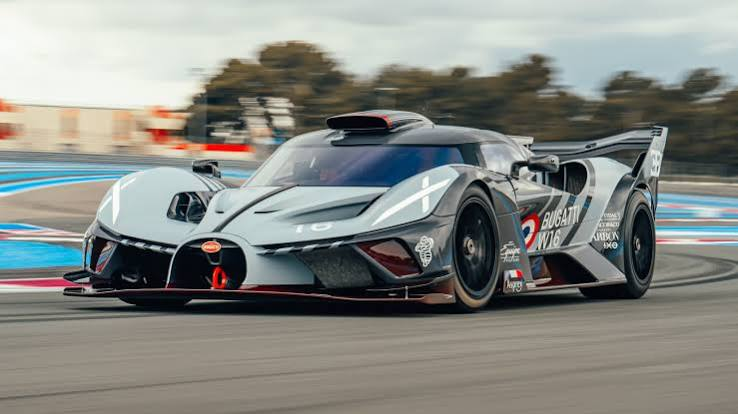
A powerful engine alone cannot make a successful track car. Equally important are its braking capabilities, tyre grip, and ability to remain predictable under demanding conditions.
The Bugatti Bolide uses a carbon-carbon braking system developed with specialist motorsport technology. Bugatti describes the system as comparable to the braking technology used in top-level endurance racing and Formula 1 machinery.
Carbon-carbon brakes are designed to withstand extremely high temperatures. This is valuable when a vehicle repeatedly slows down from high speeds during demanding track sessions.
The car also uses Michelin racing slick tyres and permanent all-wheel drive with electronically controlled differentials. Together, these systems help distribute power and maintain traction when accelerating out of corners.
Bugatti Bolide Top Speed and Track Performance
The Bugatti Bolide top speed is specified at 380 km/h (236 mph) in its low-downforce configuration. This is an official production-model figure, rather than the simulated speed claimed for the original experimental concept.
When Bugatti introduced the Bolide in 2020, it discussed a simulated top speed exceeding 500 km/h for the experimental study. That calculation was based on the concept’s different configuration and should not be presented as the production car’s confirmed top speed.
The production vehicle was engineered with a broader focus on circuit performance. Cornering grip, braking, traction, and aerodynamic balance are just as important as maximum speed.
What About the Bugatti Bolide 0–60 Time?
Many enthusiasts search for the Bugatti Bolide 0–60 mph time because acceleration is an easy way to compare performance cars.
However, a clearly established, independently verified production-model 0–60 mph figure is not provided in the technical specification sheet cited here. It is better to avoid repeating unverified acceleration numbers as official facts.
How Much Does the Bugatti Bolide Cost?
The original Bugatti Bolide price was announced at approximately €4 million before taxes per vehicle. This placed it among the most exclusive track-focused hypercars available to collectors.
Its price reflects several factors, including specialised engineering, limited production, advanced materials, and the development of motorsport-inspired technologies.
Unlike a conventional luxury car, the Bolide is not designed for everyday transportation. Buyers are paying for an extremely specialised performance vehicle, access to Bugatti’s exclusive customer experience, and a limited-production model built around the W16 engine.
Is the Bugatti Bolide for Sale?
All 40 production examples were allocated to customers following the production announcement. Therefore, finding a new factory allocation is not a realistic option.
A pre-owned Bugatti Bolide could potentially appear through specialist dealers, private collectors, or luxury-car auction houses. However, availability and resale prices depend on individual owners and market conditions.
The original €4 million price should not be confused with the current resale value. There is no single confirmed secondary-market price that applies to every example.
How Many Bugatti Bolides Were Made?
Bugatti planned a production run of just 40 Bolide vehicles, making it an exceptionally exclusive addition to the company’s history.
The project began with an experimental concept in October 2020. In August 2021, Bugatti announced that the concept would become a limited-production track car. Development and testing continued before customer deliveries began.
In November 2025, Bugatti announced the completion of the final Bolide. Its final example featured a personalised design inspired by the owner’s Bugatti Type 35, connecting the modern hypercar with the company’s historic racing heritage.
The limited production quantity also makes the Bolide interesting to collectors. Its combination of a W16 powertrain, track-only engineering, and individual customer specifications gives it a distinctive place among modern hypercars.
Is the Bugatti Bolide Street Legal?
The standard factory Bugatti Bolide is a track-only vehicle and is not intended for public-road use. Its engineering, equipment, and overall configuration are designed around racing circuits rather than normal road conditions.
This is an important difference between the Bolide and road-going Bugatti models such as the Chiron.
There have also been developments involving specially modified examples. In 2026, The Supercar Blog reported a road-legal Bolide conversion by Lanzante. However, such a conversion should not be confused with the original factory specification.
Whether a modified vehicle can legally use public roads depends on its modifications, registration, and the regulations of the country where it operates.
Bugatti Bolide vs Other Hypercars
The Bugatti Bolide belongs to a different category from many traditional hypercars. Its track-only purpose makes comparisons with road-going performance vehicles particularly interesting.
Bugatti Bolide vs Bugatti Chiron
The Chiron was developed as a road-going luxury hypercar, combining extreme performance with comfort and usability. The Bolide takes the W16 concept in a more specialised direction, focusing on circuit performance, aerodynamic efficiency, and weight reduction.
Bugatti Bolide vs Mercedes-AMG ONE
The Mercedes-AMG ONE uses Formula 1-derived hybrid technology, including a turbocharged V6 engine and electric motors. The Bolide instead relies on its quad-turbocharged W16 powertrain.
Both demonstrate different approaches to extreme automotive engineering, but the Bolide is designed specifically for track use, whereas the AMG ONE is road legal.
| Comparison | Bugatti Bolide | Bugatti Chiron | Mercedes-AMG ONE |
| Primary purpose | Track-only | Road-focused | Road and track |
| Engine | W16 | W16 | Hybrid V6 |
| Turbochargers | Four | Four | One |
| Powertrain | Combustion | Combustion | Hybrid |
| Road legal | No, factory specification | Yes | Yes |
| Main focus | Circuit performance | Luxury and speed | F1-derived technology |
The most important distinction is purpose. These vehicles should not be judged by horsepower alone because their engineering priorities and intended driving environments are different.
Final Verdict: Why Is the Bugatti Bolide So Special?
The Bugatti Bolide represents a different side of Bugatti’s engineering philosophy. Rather than focusing on everyday luxury and road usability, it combines a powerful W16 engine, lightweight construction, advanced aerodynamics, and specialist racing technology into an uncompromising track-only hypercar.
Its limited production of 40 vehicles, distinctive design, and specialised engineering make it particularly interesting to automotive enthusiasts and collectors.
More than just an extremely powerful car, the Bugatti Bolide demonstrates how far a manufacturer can push an established engine platform when the main objective is circuit performance.
Frequently Asked Questions About Bugatti Bolide
1. How much does a Bugatti Bolide cost?
The original announced Bugatti Bolide price was approximately €4 million before taxes. Its current resale price may differ depending on availability, condition, and collector demand.
2. What is the Bugatti Bolide top speed?
The production Bugatti Bolide has an official specified top speed of 380 km/h (236 mph) in its low-downforce configuration.
3. How much horsepower does the Bugatti Bolide have?
The production model produces 1,600 PS, equivalent to approximately 1,578 bhp, from its 8.0-litre quad-turbocharged W16 engine.
4. Is the Bugatti Bolide street legal?
The standard factory Bolide is a track-only vehicle and is not intended for public roads. Specially modified examples may have different legal status depending on local regulations.
5. How many Bugatti Bolides were produced?
Bugatti planned a limited production run of 40 vehicles. The company announced completion of the final example in November 2025.
6. What engine does the Bugatti Bolide use?
It uses an 8.0-litre W16 engine with four turbochargers, producing 1,600 PS and 1,600 Nm of maximum torque.
7. What is the Bugatti Bolide 0–60 mph time?
Bugatti’s published technical specification does not establish an independently verified production-model 0–60 mph time. Unverified figures should therefore be treated cautiously.
You May Also Read: Mexico National Football Team vs South Korea National Football Team



One thought on “Bugatti Bolide: Specs, Price, Top Speed, and Performance”