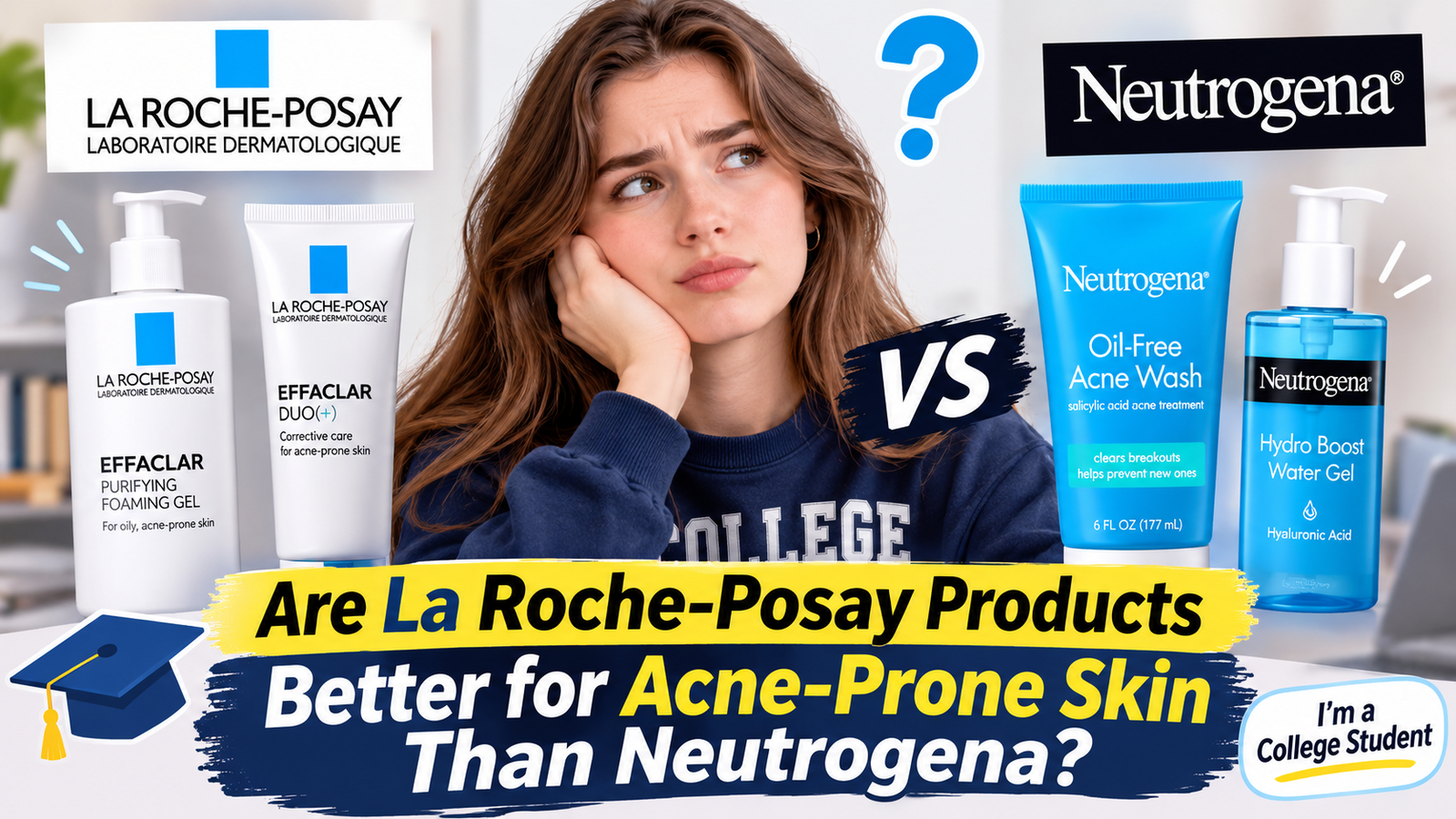
Choosing skincare as a college student can be challenging, especially when you want to control breakouts without spending too much money. La Roche-Posay and Neutrogena are two popular skincare brands, but they approach acne care differently. So, are La Roche-Posay products better for acne-prone skin than Neutrogena?
The answer depends on your skin type, acne concerns, and the ingredients in each product. La Roche-Posay offers several options for sensitive skin and acne management, while Neutrogena provides accessible acne treatments, including salicylic acid cleansers. Neither brand is automatically better for everyone. The smartest choice is the product that addresses your specific acne concerns without irritating your skin or stretching your student budget.
La Roche-Posay vs. Neutrogena at a Glance
La Roche-Posay focuses heavily on sensitive-skin skincare, hydration, and targeted treatments. Its Effaclar collection includes products designed for oily and acne-prone skin.
Neutrogena offers a broad range of affordable skincare products, including cleansers and treatments formulated with established acne-fighting ingredients.
Here is how the brands compare:
| Comparison Factor | La Roche-Posay | Neutrogena |
| General focus | Sensitive skin and targeted skincare | Everyday skincare and acne treatment |
| Acne product range | Effaclar collection | Oil-Free Acne Wash and other treatments |
| Salicylic acid | Available in selected products | Available in selected products |
| Sensitive-skin options | Several targeted formulations | Fragrance-free options available |
| Moisturizers | Toleriane range | Hydro Boost range |
| Price | Generally premium | Generally more affordable |
| Student suitability | Good for targeted purchases | Good for budget-conscious routines |
Both brands offer useful options, but their individual formulations matter more than their overall reputations.
Which Acne-Fighting Ingredients Matter Most?
Before choosing a skincare brand, understand the ingredients responsible for treating acne. Different active ingredients address different types of breakouts.
Salicylic Acid for Blackheads and Clogged Pores
Salicylic acid is a beta hydroxy acid (BHA) that helps exfoliate inside pores and remove accumulated dead skin cells. It is particularly useful for people dealing with blackheads, whiteheads, and clogged pores.
For example, La Roche-Posay Effaclar Medicated Gel Cleanser and Neutrogena Oil-Free Acne Wash both offer US formulations containing 2% salicylic acid.
This makes them relevant alternatives for someone looking for an acne-focused cleanser. However, their complete formulas and cleansing experiences are not identical.
Benzoyl Peroxide for Inflamed Acne
Benzoyl peroxide helps reduce acne-causing bacteria and is commonly used for inflammatory breakouts, including red pimples.
It can be effective, but dryness, peeling, and irritation are possible. It can also bleach towels and clothing.
The American Academy of Dermatology (AAD) includes benzoyl peroxide among its strongly recommended topical acne treatments.
Adapalene for Recurring Breakouts
Adapalene is a topical retinoid that helps prevent clogged pores and treat different types of acne.
Unlike a regular face wash, it is a leave-on treatment. It should be introduced gradually according to its directions because irritation and dryness can occur.
These ingredients are not interchangeable. Choosing the right one depends on whether your main concern is clogged pores, inflammatory acne, or recurring breakouts.
La Roche-Posay vs. Neutrogena: Comparing Their Acne Products
Looking at actual products gives a more meaningful comparison than simply deciding which company has the better reputation.
La Roche-Posay Effaclar Products
La Roche-Posay’s Effaclar collection is designed for oily and acne-prone skin.
The Effaclar Medicated Gel Cleanser is one option for people dealing with excess oil and clogged pores. Its US formulation contains 2% salicylic acid, which helps treat acne.
The brand also offers targeted skincare products and moisturizers for different skin concerns.
Another consideration is skin comfort. People who experience dryness from acne treatments may benefit from choosing a suitable moisturizer alongside their cleanser.
Neutrogena Acne-Fighting Products
Neutrogena’s Oil-Free Acne Wash is a recognizable option for people looking for an affordable acne cleanser.
Its US fragrance-free formulation contains 2% salicylic acid. The product is designed to help treat breakouts and prevent new ones.
Neutrogena also offers different acne treatments and moisturizing products. This gives students flexibility when building a basic skincare routine.
However, not every Neutrogena product is suitable for every acne-prone skin type. Some formulas contain fragrance, and certain acne treatments may cause dryness.
Which Brand Offers Better Performance?
| Product | Main purpose | Key consideration |
| La Roche-Posay Effaclar Medicated Gel Cleanser | Acne-focused cleansing | 2% salicylic acid |
| Neutrogena Oil-Free Acne Wash | Acne-focused cleansing | 2% salicylic acid |
| La Roche-Posay Toleriane Double Repair | Moisturizing | Ceramide, glycerin, and niacinamide |
| Neutrogena Hydro Boost Water Gel | Hydration | Lightweight gel moisturizer |
For acne cleansing, the two salicylic acid products are reasonable options to compare. Neither has an automatic advantage simply because of its brand name.
For hydration, the comparison is different. Toleriane Double Repair emphasizes skin-barrier support, while Hydro Boost is designed around lightweight hydration.
Product availability and formulas can vary by country, so check the ingredient list on the exact product you intend to purchase.
Which Brand Is Better for Your Skin Type?
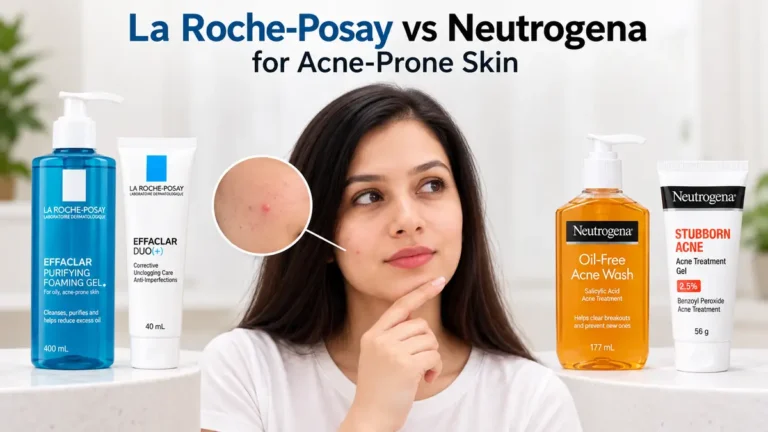
Your skin type can make a bigger difference than the brand you choose.
Oily and Acne-Prone Skin
If your face becomes shiny during lectures, commuting, or long study sessions, look for lightweight products that do not leave an uncomfortable greasy feeling.
Both brands offer acne-focused cleansers containing salicylic acid.
Neutrogena may be a practical starting point if affordability is your main concern. La Roche-Posay is another option if you prefer its Effaclar formulations.
Sensitive and Acne-Prone Skin
Sensitive skin requires additional care because aggressive cleansing and multiple active ingredients can worsen irritation.
La Roche-Posay has several products designed with sensitive skin in mind. However, this does not mean every La Roche-Posay product will suit everyone.
Neutrogena also offers fragrance-free formulations, including its fragrance-free Oil-Free Acne Wash.
Check the full ingredient list and introduce new products gradually.
Dry or Combination Skin
If your skin feels tight after washing, focus on hydration instead of choosing the strongest acne cleanser.
La Roche-Posay Toleriane Double Repair contains glycerin, niacinamide, and ceramide NP. These ingredients support hydration and the skin barrier.
Neutrogena Hydro Boost Water Gel is another option for lightweight hydration.
Choose according to how your skin responds rather than assuming one moisturizer will work better for every acne-prone person.
Which Is Better, Neutrogena Hydro Boost or La Roche-Posay?
This comparison deserves special attention because both products serve a different purpose from an acne treatment.
Neutrogena Hydro Boost Water Gel is designed to provide lightweight hydration. Its gel texture can appeal to people who dislike heavy creams.
La Roche-Posay Toleriane Double Repair is a moisturizer that combines glycerin, niacinamide, and ceramide NP to support skin hydration and barrier function.
Which is better?
- Choose Hydro Boost if you prefer a lightweight gel moisturizer and want straightforward hydration.
- Consider Toleriane Double Repair if you want a moisturizer with additional barrier-supporting ingredients.
- For very sensitive skin, check the exact Hydro Boost version because some formulations contain fragrance.
Neither moisturizer should be considered an acne treatment on its own. Both can be useful alongside an appropriate acne routine.
Which Brand Is More Affordable for College Students?
For students, price matters just as much as product performance.
Neutrogena generally offers more budget-friendly entry points, particularly in its everyday acne cleanser range. La Roche-Posay often occupies a higher price category.
However, buying an expensive skincare collection is unnecessary.
A basic acne routine usually needs just four essentials:
- A gentle cleanser.
- An appropriate acne treatment.
- A moisturizer.
- A broad-spectrum sunscreen with SPF 30 or higher.
For example, a student with oily skin and occasional blackheads might start with a salicylic acid cleanser, a lightweight moisturizer, and sunscreen.
Someone with recurring inflammatory acne may need a different treatment, such as benzoyl peroxide, rather than purchasing several exfoliating cleansers.
Compare the price per ounce or milliliter instead of looking only at the bottle price. Also, avoid purchasing multiple products with overlapping active ingredients just because they are on sale.
How to Build a Simple Acne Routine With Either Brand
A consistent routine is generally more useful than switching products every few days.
Morning Routine
- Wash your face with a gentle cleanser.
- Apply a suitable moisturizer.
- Finish with broad-spectrum SPF 30 or higher sunscreen.
Evening Routine
- Cleanse your face to remove dirt, oil, and sunscreen.
- Apply your selected acne treatment according to its instructions.
- Use moisturizer to reduce dryness and support your skin barrier.
If you are new to acne treatments, introduce one active ingredient at a time. Avoid combining several strong treatments immediately.
The AAD explains that most people need at least six to eight weeks to begin seeing fewer breakouts with an effective acne treatment. Consistency is important, and complete clearing can take longer.
Can You Combine La Roche-Posay and Neutrogena Products?
Yes. You do not need to use products from only one skincare brand.
For example, you could use a Neutrogena cleanser, a La Roche-Posay moisturizer, and a suitable sunscreen from another company.
The important consideration is ingredient compatibility.
Using multiple exfoliating or acne-fighting treatments without a plan can cause dryness and irritation. Follow product directions and avoid introducing several new active ingredients simultaneously.
If your skin becomes persistently irritated, reduce the number of active products and seek professional advice when necessary.
Do Dermatologists Really Recommend Neutrogena?
Dermatologists do recommend certain skincare ingredients and formulations for acne, but that does not mean they endorse every product from a particular company.
The American Academy of Dermatology recommends treatments such as benzoyl peroxide and topical retinoids for acne. Salicylic acid is also included among its recommended treatment options.
Neutrogena offers products containing some of these ingredients, including its 2% salicylic acid acne cleanser.
La Roche-Posay also offers products containing established acne-fighting ingredients.
Therefore, it is more useful to evaluate the active ingredient, formulation, and your skin’s response than to rely on a brand’s dermatologist-recommended marketing claims.
What Are the Top 5 Acne Products to Consider?
There is no universal top-five list that works for everyone. However, these five product types are useful starting points when building an acne routine:
- Salicylic acid cleanser: Consider La Roche-Posay Effaclar Medicated Gel Cleanser or Neutrogena Oil-Free Acne Wash for clogged pores and blackheads.
- Benzoyl peroxide treatment: Useful for inflammatory acne when appropriate for your skin.
- Adapalene 0.1% gel: An over-the-counter retinoid option for recurring acne, where available.
- Non-comedogenic moisturizer: Consider La Roche-Posay Toleriane Double Repair or a suitable Neutrogena Hydro Boost formulation.
- Broad-spectrum sunscreen: Choose an SPF 30 or higher formula that does not clog your pores.
You do not need all five as separate treatment products. Start with the products that address your actual skin concerns.
When Should You See a Dermatologist?
If you experience deep, painful pimples, persistent breakouts, or acne scars, consider consulting a dermatologist.
Over-the-counter cleansers may not be enough for moderate or severe acne. A dermatologist can identify the type of acne and recommend an appropriate treatment plan.
Getting professional advice early can also help prevent unnecessary product purchases and reduce the risk of permanent scarring.
Final Verdict: La Roche-Posay or Neutrogena?
La Roche-Posay and Neutrogena both offer useful options for acne-prone skin. La Roche-Posay may appeal to students looking for targeted skincare and barrier-supporting moisturizers, while Neutrogena can be a practical choice for affordable acne cleansers and everyday hydration.
If you are on a tight college budget, Neutrogena is a sensible starting point. If a particular La Roche-Posay formulation better matches your skin’s needs, the higher price may be worthwhile.
Ultimately, the best acne skincare product is the one that addresses your breakouts, suits your skin, and fits your budget.
Frequently Asked Questions
1. Is La Roche-Posay a good brand for acne-prone skin?
Yes. La Roche-Posay offers products specifically designed for oily and acne-prone skin, including its Effaclar range. Selected products contain ingredients such as salicylic acid that help manage breakouts. However, suitability depends on your skin type and the individual formulation.
2. Which is better, Neutrogena Hydro Boost or La Roche-Posay?
It depends on your moisturizing needs. Hydro Boost Water Gel is designed for lightweight hydration, while La Roche-Posay Toleriane Double Repair offers ingredients such as ceramides and niacinamide for skin-barrier support. Neither is a direct acne treatment.
3. Do dermatologists really recommend Neutrogena?
Dermatologists recommend evidence-based acne ingredients, including salicylic acid and benzoyl peroxide. Neutrogena offers products containing these ingredients, but recommendations depend on the specific product and the individual’s skin concerns.
4. Is Neutrogena suitable for sensitive acne-prone skin?
Some Neutrogena products are suitable options for sensitive skin, including fragrance-free formulations. However, acne-fighting ingredients can still cause dryness or irritation, so check the ingredients and introduce products gradually.
5. Can I use La Roche-Posay and Neutrogena together?
Yes. You can combine products from both brands as long as their ingredients and intended uses are compatible. Avoid using multiple strong acne treatments together without professional guidance.
6. How long does acne treatment take to work?
The American Academy of Dermatology explains that most people need at least six to eight weeks to see fewer breakouts. More significant improvement may take several months, depending on the treatment and severity of acne.