
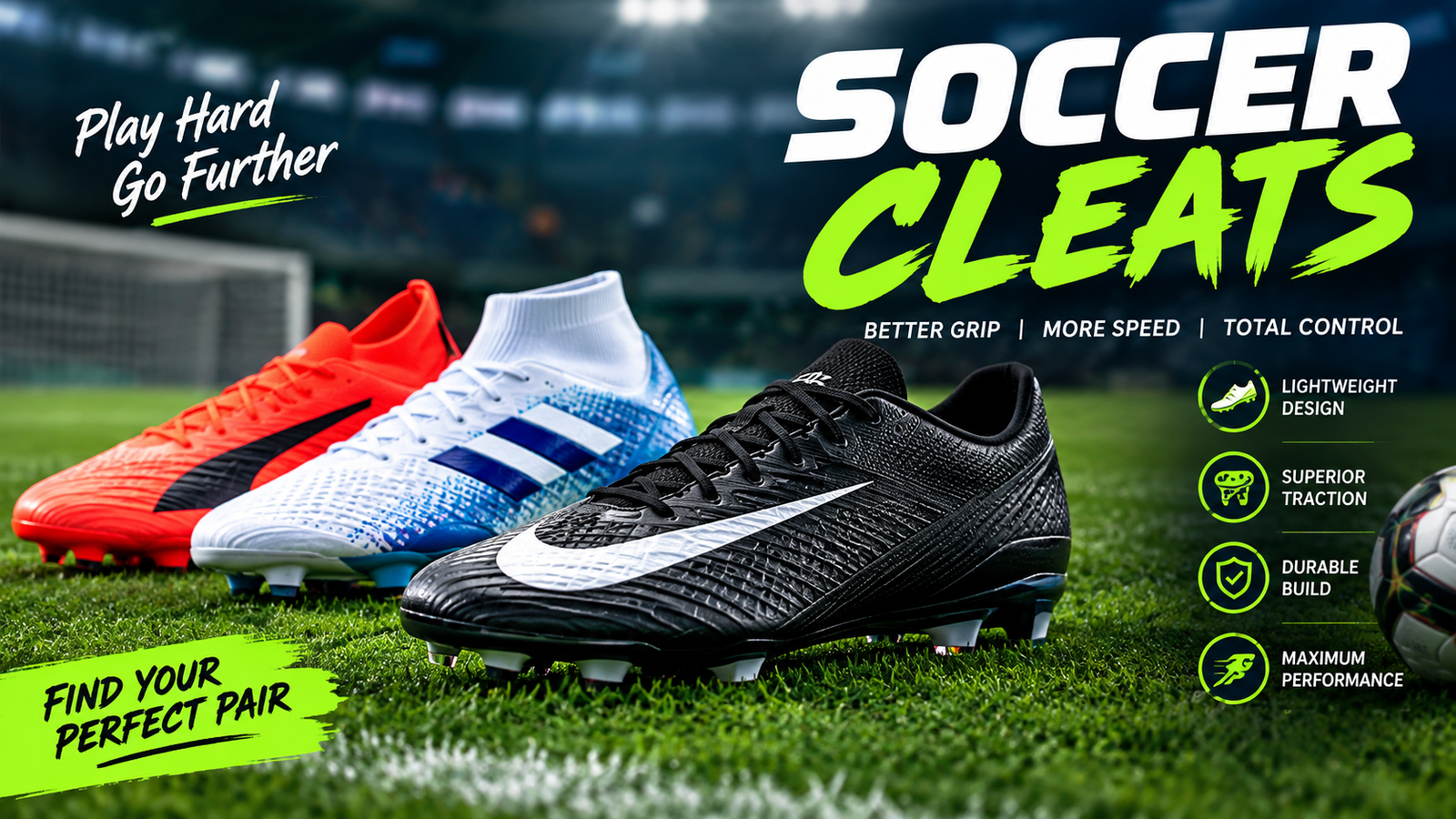
Choosing the right soccer cleats is about more than picking a popular brand or the latest design. The best pair should match your playing surface, foot shape, position, playing style, and budget. A lightweight speed cleat may work well for a winger, while a midfielder may prefer a boot that emphasizes touch and comfort.
Whether you’re buying your first pair or replacing worn-out boots, understanding these differences can help you make a smarter choice. This soccer cleats 101 guide explains the main types, how they should fit, what to look for by position, and how to choose between major brands.
What Are the Best Soccer Cleats?
There isn’t one soccer cleat that is best for every player. The right choice depends on where you play and what you need from your boots.
| Player Need | What to Look For |
| Speed | Lightweight construction and responsive soleplate |
| Ball control | Touch-focused upper and secure fit |
| Comfort | Soft, flexible upper and suitable shape |
| Wide feet | Roomier or adaptive fit |
| Natural grass | FG or SG, depending on conditions |
| Artificial grass | AG or suitable MG cleats |
| Turf | TF outsole |
| Indoor soccer | IC/IN flat outsole |
A useful rule is to choose your playing surface first, then consider fit, foot shape, playing style, position, and budget.
How to Choose Soccer Cleats
Start With Your Playing Surface
The soleplate is one of the most important parts of a soccer cleat. Using the wrong outsole can affect traction, comfort, and how naturally you can move.
For firm natural grass, firm-ground cleats are usually the appropriate starting point. Artificial surfaces may require AG or multi-ground options, while turf and indoor courts require different outsole designs.
Don’t choose cleats simply because they look good. A boot designed for one surface isn’t automatically suitable for another.
Find the Right Fit
Soccer cleats should feel secure without causing painful pressure. Your heel shouldn’t move excessively, and your foot shouldn’t slide inside the boot when accelerating or changing direction.
Your toes should have enough room to avoid uncomfortable compression, but excessive space can reduce control.
Always consider the socks you normally wear when trying on new cleats.
Consider Your Foot Shape
Foot shape can make or break a cleat purchase. Some models have a more anatomical or narrow construction, while others use flexible materials that accommodate a wider range of feet.
If you regularly experience pressure along the sides of your feet, numbness, or painful rubbing, the problem may be the shape of the cleat rather than the size.
Match the Cleat to Your Playing Style
Think about what you actually do during a match.
Speed-oriented players may prefer lightweight boots that feel responsive when sprinting. Players who spend more time passing, dribbling, or creating chances may prioritize touch and ball control.
Comfort can be more important for players who train several times a week, while versatile players may want a balanced boot rather than an extreme speed or control model.
Consider Your Position
Your position can help narrow the choices, but it shouldn’t determine your cleat by itself. A fast fullback and a defensive midfielder may have very different requirements despite both playing defensively.
Your movement patterns and personal preferences matter just as much.
Soccer Cleat Types Explained
FG: Firm Ground
Firm-ground cleats are primarily designed for natural grass that is relatively firm and not excessively wet.
They are a common choice for outdoor soccer because their stud arrangement provides a balance of traction and maneuverability.
AG: Artificial Ground
Artificial-ground cleats are designed specifically for synthetic grass surfaces. Their outsole construction is intended to distribute traction across the surface.
If you regularly play on artificial grass, check the manufacturer’s surface recommendation instead of automatically using FG boots.
SG: Soft Ground
Soft-ground cleats are intended for wet, soft, or muddy natural grass. They commonly use longer or replaceable studs to provide additional traction.
They aren’t the ideal everyday choice for firm pitches.
MG: Multi-Ground
Multi-ground cleats are designed to provide greater versatility across different playing surfaces.
They’re worth considering for players who regularly move between different types of pitches and don’t want separate pairs for every surface.
TF: Turf
Turf shoes use many short rubber traction elements rather than traditional soccer studs. They are designed for shorter artificial turf surfaces.
They are different from AG cleats and shouldn’t automatically be treated as interchangeable.
IC/IN: Indoor
Indoor soccer shoes typically have flat rubber outsoles designed for indoor courts. They are commonly used for futsal and indoor soccer.
Using traditional outdoor studs indoors can provide poor traction and may damage the playing surface.
Best Soccer Cleats for Different Playing Styles
Best for Speed
Speed-focused cleats usually emphasize low weight, responsiveness, and a secure fit. They can suit wingers, strikers, and attacking players who rely heavily on acceleration.
However, lighter doesn’t automatically mean better. A slightly heavier boot that fits your foot correctly may perform better for you than an ultralight model that causes discomfort.
Best for Ball Control
Control-oriented boots generally emphasize touch, stability, and a secure connection between the foot and ball.
They can be particularly appealing to midfielders and technical players who frequently pass, receive, and dribble.
Best for Comfort
Comfort-focused cleats can be useful for players who spend many hours training or prefer a softer, less restrictive feel.
Prioritize fit and material rather than choosing a boot simply because it is marketed as comfortable.
Best All-Around Cleats
If you don’t specialize in one particular aspect of the game, a balanced boot may be the smartest option.
An all-around cleat should provide dependable traction, reasonable weight, good comfort, and a secure fit without overemphasizing one feature.
Best Soccer Cleats by Position
Strikers
Strikers often benefit from a combination of acceleration, secure lockdown, and a clean striking feel. Lightweight boots can be attractive for players who frequently make runs behind the defense.
Wingers
Wingers typically make repeated sprints and sharp directional changes. A lightweight, responsive cleat with reliable lockdown can suit this style.
Midfielders
Midfielders often need versatility because they may spend the match passing, defending, carrying the ball, and changing direction.
Comfort, traction, and touch can be more valuable than simply choosing the lightest available boot.
Defenders
Centre-backs generally benefit from stability, secure fit, durability, and dependable traction. The ability to remain balanced during challenges and changes of direction is particularly important.
Fullbacks
Fullbacks combine defensive and attacking responsibilities. They may therefore benefit from a balance between speed, traction, stability, and comfort.
Goalkeepers
Goalkeepers need reliable traction for quick lateral movements and explosive reactions. A secure, comfortable fit is especially important because unnecessary foot movement inside the boot can be distracting.
Best Soccer Cleats for Different Foot Shapes
Wide Feet
If you have wide feet, look for models with an accommodating shape, flexible upper, or adaptive construction. Avoid forcing your foot into a narrow boot simply because it is popular.
Signs a cleat may be too narrow include pressure on the sides of your feet, numbness, or persistent discomfort.
Narrow Feet
Players with narrow feet may prefer a snugger construction that provides better lockdown. Excessive space around the midfoot or heel can allow unwanted movement.
Regular-Width Feet
Players with average-width feet generally have the widest selection. Even so, different brands and models can fit differently, so try before buying whenever possible.
How Should Soccer Cleats Fit?
A well-fitting soccer cleat should feel snug without being painful.
Your heel should remain secure during acceleration, while the midfoot should feel supported. Your toes shouldn’t be painfully compressed against the front of the shoe.
Walk, jog, and make a few quick directional movements when trying on cleats. If your heel slips, your toes feel cramped, or pressure develops around the sides of your foot, consider a different size or model.
Soccer Cleat Materials Explained
Modern cleats use a variety of materials.
Leather can provide a soft, natural feel and may mold comfortably to the foot, although it can require more care.
Synthetic materials can offer consistent shape, lower weight, and easier maintenance.
Knit and textile uppers can provide flexibility and a close-fitting sensation.
The best material depends on your priorities. Don’t assume one material is automatically superior for every player.
Nike vs. Adidas vs. PUMA vs. Mizuno
Nike, Adidas, PUMA, and Mizuno all offer different soccer cleat families designed around different playing characteristics.
Nike is well known for speed-focused and control-oriented options. Adidas offers a broad range covering speed, control, and touch. PUMA has models aimed at speed and versatile attacking play, while Mizuno is particularly recognized for boots that emphasize touch and comfort.
Rather than asking which brand is universally best, compare the individual model’s fit, surface compatibility, construction, and intended use.
Soccer Cleats by Budget
Budget Cleats
Entry-level boots can be a sensible choice for recreational players, beginners, or growing players. Prioritize correct fit, suitable traction, and durability over premium technology.
Mid-Range Cleats
Mid-range models can provide a useful balance between performance features and price. They are often a strong choice for regular players who want more refinement without paying elite-level prices.
Premium Cleats
Elite boots may use lighter materials, advanced soleplates, and more specialized construction. But paying more doesn’t guarantee that a premium model will fit your foot better.
For many players, the best value comes from a boot that fits correctly and matches their surface and playing style.
Common Soccer Cleat Buying Mistakes
Avoid these common mistakes when shopping for new boots:
- Choosing based only on appearance.
- Using the wrong soleplate for your playing surface.
- Buying a size that is too small.
- Assuming the most expensive cleat is automatically the best.
- Choosing purely according to position.
- Ignoring your foot shape.
- Expecting one pair to perform equally well on every surface.
A good purchase starts with your actual playing conditions rather than marketing claims.
Do You Need More Than One Pair of Soccer Cleats?
Not every player needs multiple pairs.
If you play exclusively on firm natural grass, one appropriate FG pair may be enough. But if you train on artificial turf and play matches on natural grass, having separate AG and FG footwear can make more sense.
Indoor players should also use dedicated indoor shoes rather than trying to adapt outdoor cleats.
Frequently Asked Questions About Soccer Cleats
What are the best soccer cleats?
The best soccer cleats depend on your surface, foot shape, playing style, position, and budget. There is no single model that suits every player.
How should soccer cleats fit?
They should feel snug and secure without causing painful pressure. Your heel should stay in place, while your toes should have enough room to remain comfortable.
What is the difference between FG and AG soccer cleats?
FG cleats are generally designed for firm natural grass, while AG cleats are designed for artificial grass. Always check the manufacturer’s surface recommendation.
What soccer cleats are best for wide feet?
Look for models with a more accommodating shape, flexible materials, or adaptive uppers. The exact best option depends on your foot shape and the specific model.
Do expensive soccer cleats perform better?
Not necessarily. Premium cleats may use advanced materials and construction, but a less expensive cleat that fits correctly can be a better choice for an individual player.
Can you wear soccer cleats on turf?
It depends on the type of turf and the outsole. TF shoes are commonly designed for short turf, while AG boots are intended for artificial grass. Check the manufacturer’s recommendation.
How long do soccer cleats last?
Their lifespan depends on how often you play, the surface, construction, and maintenance. Replace them when the outsole, studs, upper, or overall structure becomes significantly worn or damaged.
Conclusion
The best soccer cleats aren’t necessarily the newest, lightest, or most expensive models. The right pair is the one that matches your surface, foot shape, playing style, position, and budget.
Start with the field you play on, make sure the fit is secure, and then consider whether you prioritize speed, control, comfort, or versatility. Once those factors are clear, comparing brands and models becomes much easier.
A thoughtful approach to buying soccer cleats can improve comfort and confidence while helping you get more value from every pair.
You May Also Read: Freaks and Geeks Cast
