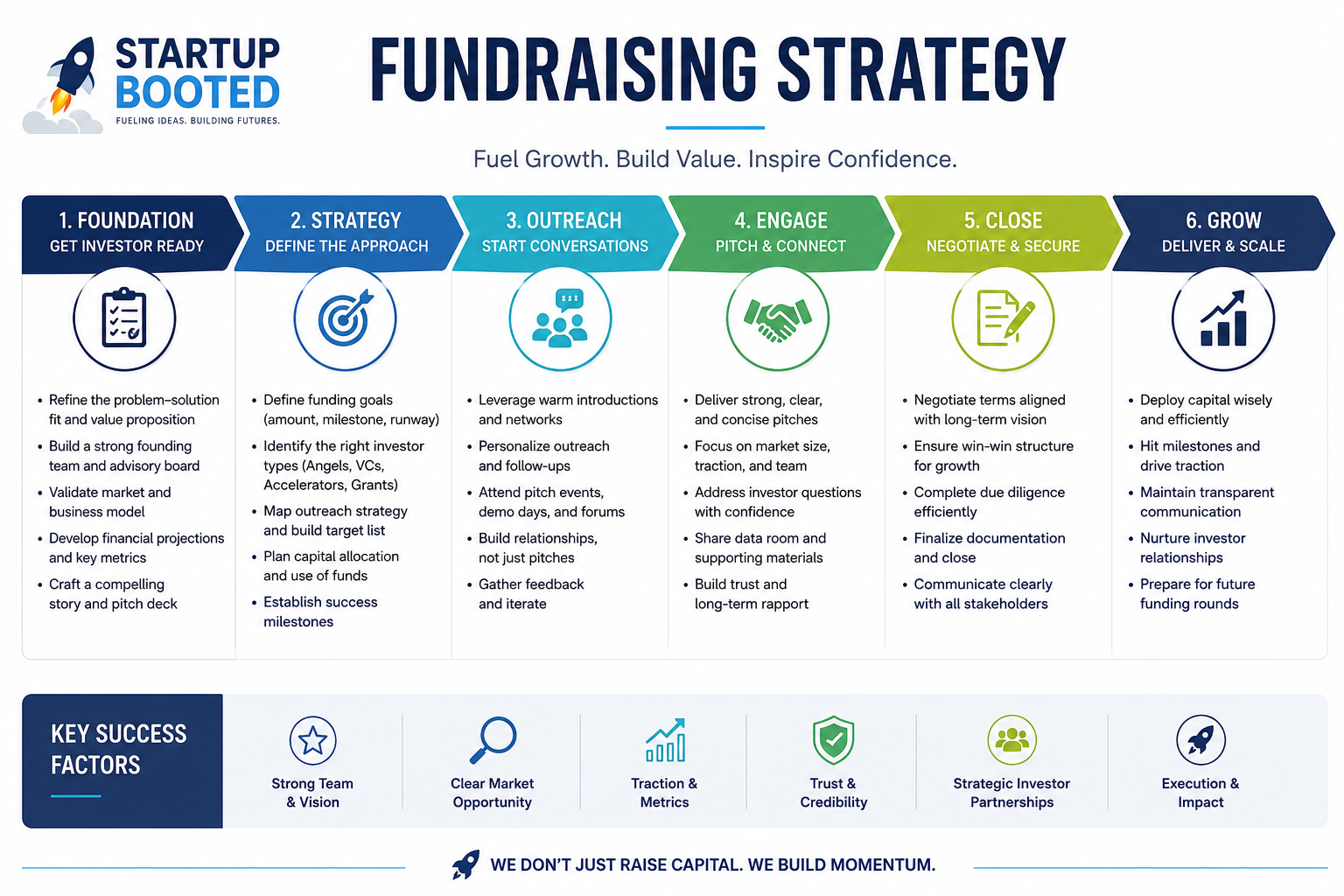
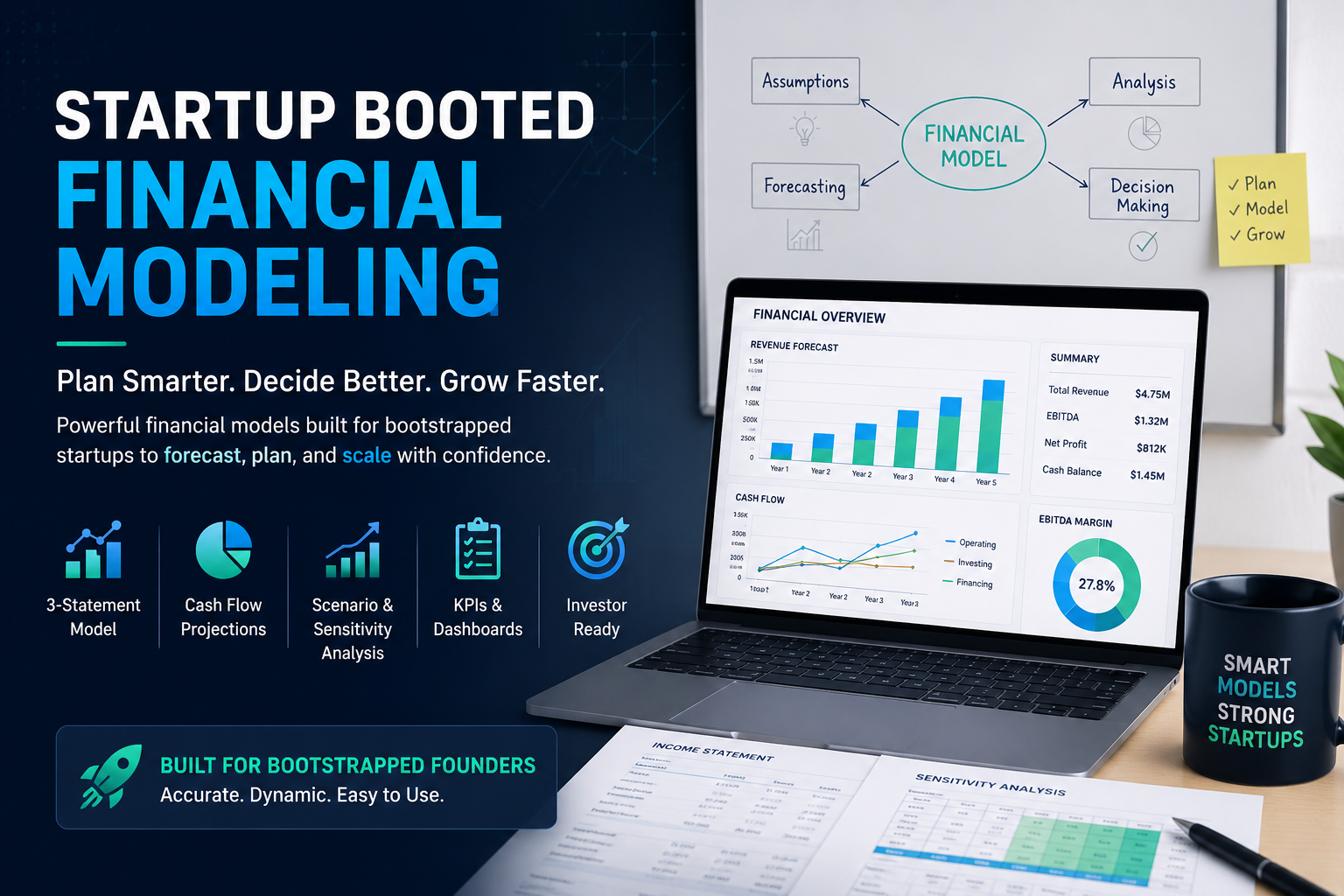
Economic preparing is one of the most important responsibilities for start-up founders. Whether a business is self-funded, revenue-driven, or functioning without substantial external investment, creating a trusted financial product may determine their long-term success. This is where startup booted financial modeling becomes essential. It will help entrepreneurs realize cash flow, estimate growth, handle costs, and make data-driven decisions.
Unlike venture-backed businesses that’ll prioritize quick expansion, bootstrapped startups frequently concentrate on profitability, effectiveness, and sustainable scaling. A well-structured startup booted financial modeling platform offers exposure into financial health while helping pioneers make for uncertainty. By combining forecasting, budgeting, and performance evaluation, businesses can make a roadmap that supports growth without unwanted financial risk.
What Is Startup Booted Financial Modeling?
Startup booted financial modeling identifies the procedure of building financial forecasts and logical frameworks specifically designed for self-funded or revenue-funded startups. The product on average includes predicted revenue, functioning costs, cash flow, gain prices, and growth assumptions. Strong financial forecasting and cash flow management let pioneers to know potential company performance before making significant decisions.
Unlike standard corporate versions, bootstrapped start-up versions prioritize effectiveness and capital preservation. Founders frequently depend on revenue predictions and cost preparing to ascertain the length of time present sources may support operations. The goal is not merely growth but sustainable and profitable growth that can be maintained without outside funding.
Why Financial Modeling Matters for Bootstrapped Startups
A start-up functioning without large investment rounds must carefully handle every dollar. Startup booted financial modeling assists recognize spending priorities, growth opportunities, and possible risks before they influence the business. Efficient budget forecasting and financial preparing produce a clearer photograph of potential performance.
Economic versions also improve proper decision-making. Whether hiring workers, launching products, or expanding into new areas, pioneers may assess various cases applying company forecasting and start-up budgeting techniques. This decreases uncertainty and supports well informed decisions.
Core Components of a Startup Financial Model
Every powerful startup booted financial modeling platform contains several interconnected sections. Revenue assumptions, functioning costs, client purchase prices, and gain prices sort the foundation. Appropriate income predictions and cost checking offer meaningful insights into over all company health.
Cash flow forecasting is equally crucial since profitability does not at all times suggest accessible cash. Organizations must monitor functioning capital and financial performance metrics to ensure they are able to meet detailed obligations. A whole product amounts growth objectives with practical resource availability.
Revenue Forecasting for Sustainable Growth
Revenue forecasting is usually the starting point for startup booted financial modeling .Founders estimate potential sales centered on client demand, pricing strategies, industry conditions, and historical performance. Reliable sales forecasting and industry evaluation improve forecast accuracy.
A typical error is assuming improbable growth rates. Sustainable forecasting relies on measurable drivers such as for instance client purchase, maintenance costs, and conversion performance. Strong client growth metrics and revenue optimization strategies help maintain practical predictions that support greater planning.
Expense Planning and Cost Management
Controlling costs efficiently is essential for bootstrapped companies. Every cost must contribute directly to growth, customer care, or detailed efficiency. Step by step cost evaluation and detailed budgeting help pioneers spend sources strategically.
Economic versions must sort costs into set and variable costs. This process improves exposure and permits greater decision-making throughout uncertain periods. By using cost forecasting and cost optimization methods, startups may maintain healthy financial jobs while seeking growth opportunities.
Cash Flow Modeling and Liquidity Management
Cash flow represents the lifeblood of any startup. Also profitable businesses may battle if cash inflows and outflows are not carefully managed. Extensive startup booted financial modeling includes comprehensive cash flow forecasting and liquidity preparing processes.
Tracking cash reserves assists pioneers anticipate shortages before they occur. Efficient versions assess cost cycles, detailed spending, and potential obligations. Through practical functioning capital management and financial chance evaluation, startups may minimize financial pressure and maintain detailed stability.
Essential Financial Metrics Every Founder Should Track
Essential metrics offer actionable insights that improve company performance. Revenue growth, gain prices, burn off rate, and client purchase prices are among the most important indicators. Regular performance monitoring and financial analytics help pioneers realize tendencies around time.
Monitoring metrics permits data-driven decision-making. Organizations may recognize benefits, disadvantages, and opportunities while modifying strategies accordingly. Strong company intelligence and growth rating techniques change financial information into meaningful proper advantages.
Startup Financial Model Comparison Table
| Economic Part | Purpose | Essential Benefit | Frequent Full |
|---|---|---|---|
| Revenue Forecasting | Anticipate potential sales | Development preparing | Regular Revenue |
| Price Preparing | Control spending | Charge effectiveness | Operating Costs |
| Cash Flow Examination | Check liquidity | Economic stability | Internet Cash Flow |
| Profitability Modeling | Evaluate earnings | Sustainable growth | Disgusting Margin |
| Situation Preparing | Check assumptions | Chance reduction | Best/Worst Case Result |
| KPI Monitoring | Check performance | Greater decisions | CAC, LTV, Burn Charge |
| Budget Forecasting | Reference allocation | Strategic preparing | Budget Deviation |
Scenario Planning and Risk Analysis
One of the most important areas of startup booted financial modeling is scenario planning. Organizations rarely accomplish exactly not surprisingly, creating option predictions essential. Efficient chance management and sensitivity evaluation help pioneers make for various outcomes.
Designs should include hopeful, practical, and traditional scenarios. These predictions reveal how revenue improvements, cost increases, or industry adjustments may possibly influence operations. Extensive company continuity preparing and financial forecasting versions create resilience throughout uncertain conditions.
Common Financial Modeling Mistakes
Many pioneers create excessively hopeful versions that fail to reflect real-world conditions. Unlikely assumptions about client growth, pricing, or profitability may cause bad decisions. Appropriate financial assumptions and data-driven forecasting minimize these risks.
Still another error is failing continually to update the product regularly. Economic versions must evolve as new information becomes available. Continuous performance evaluation and estimate adjustments make sure that predictions stay applicable and actionable.
Using Financial Models to Attract Investors Later
Although many bootstrapped businesses do not initially find external funding, a strong financial product becomes important if fundraising opportunities arise. Skilled startup booted financial modeling demonstrates detailed discipline and financial awareness. Step by step investor reporting and financial predictions construct credibility.
Investors frequently assess a company’s capacity to know their numbers. A thorough product communicates proper considering and detailed maturity. Even though outside funding is never pursued, solid capital preparing and growth forecasting techniques strengthen over all company management.
The Future of Startup Financial Modeling
Contemporary startups significantly use automation, analytics tools, and AI-powered tools to enhance forecasting accuracy. Advanced predictive analytics and financial engineering options offer greater insights into company performance.
As areas become more aggressive, pioneers must depend on data-driven decision-making rather than instinct alone. Enhanced company forecasting computer software and financial modeling tools are creating superior preparing available even to early-stage startups. Organizations that embrace these innovations frequently obtain stronger aggressive advantages.
Expert Perspective on Financial Planning
As management specialist Chris Drucker famously explained, “What gets calculated gets managed.” This theory completely shows the value of startup booted financial modeling .Efficient rating through financial reporting and performance checking permits pioneers to control growth confidently and precision.
The strongest startups are not necessarily these with funding. They are usually the businesses that realize their numbers, handle sources efficiently, and adapt rapidly to adjusting conditions. Strong financial discipline remains an enduring aggressive advantage.
Conclusion
Startup booted financial modeling is far greater than a spreadsheet exercise. It provides as a proper platform that assists pioneers estimate growth, handle cash flow, spend sources, and understand uncertainty. By developing revenue predictions, cost preparing, cash flow evaluation, and scenario modeling, startups obtain the exposure needed to make smarter decisions.
Whether developing a new organization or running a current company, investing time in strong financial modeling creates a foundation for sustainable success. Founders who realize their numbers are greater prepared to control chance, seize opportunities, and achieve long-term profitability within an significantly aggressive marketplace.
FAQ
What is startup booted financial modeling?
Startup booted financial modeling is the procedure of fabricating financial forecasts and preparing frameworks for self-funded startups to guide sustainable growth and profitability.
Why is startup booted financial modeling important?
It will help pioneers estimate revenue, handle costs, monitor cash flow, and make educated company decisions applying trusted financial data.
How often should a startup update its financial model?
Many specialists recommend reviewing and updating startup booted financial modeling assumptions regular or quarterly to keep accuracy.
What metrics should be included in a startup financial model?
Crucial metrics contain revenue growth, gain prices, burn off rate, client purchase cost, entire life price, and cash flow projections.
Can startup booted financial modeling help with fundraising?
Yes. An in depth startup booted financial modeling platform demonstrates financial discipline and offers investors confidently in the company’s preparing process.
What software is commonly used for startup financial modeling?
Many startups use spreadsheets, cloud-based forecasting tools, and specific financial preparing computer software to create and maintain financial models.
How accurate should startup financial forecasts be?
Forecasts should really be practical and data-driven. The objective of startup booted financial modeling is not great forecast but educated decision-making centered on sensible assumptions.
You May Also Read: Playing Game Blog PlayBattleSquare